
Residential Yachts: The Next Luxury Address Has No Address
For wealthy global travelers, living at sea is becoming an alternative to the traditional second home — supported by a marine economy that has made South Florida a natural base for the industry. / Photo: redcharlie (Unsplash)

For those who choose to live at sea, daily life looks less like a cruise and more like a private residence that happens to change locations. Owners wake up in a different port, keep their clothes and personal belongings in the same place, work from onboard when needed, and share restaurants, wellness facilities, sports and shore experiences with a relatively small community of neighbors.
One of the most established examples is The World, Residences at Sea, a privately owned residential ship made up of 165 individual homes rather than traditional cruise cabins. Residents spend an average of three to four months a year onboard while the ship travels between continents on an itinerary shaped in part by the owners themselves.
The target market is narrow: wealthy families with multiple homes and an international lifestyle. For them, the appeal goes beyond the yacht itself. The model combines home, travel, service and community without the complexity of owning and operating a private superyacht.
That convenience is central to the proposition. Eddie Wong, residential director of The World, told Travel + Leisure: “The number one thing that I hear is the convenience.” Residents interviewed also pointed to community as a key reason for choosing a shared residential ship over owning a private yacht. Jessica Hoppe, CEO and president of The World, drew an even clearer distinction in an interview with Luxury Briefing: “For residents, it’s not a vacation — it’s their home.”
That helps explain why the category sits apart from traditional cruising. The World is collectively owned by about 150 families from 20 countries. Average occupancy ranges from 150 to 200 residents and guests, supported by roughly 300 crew members. Its 2026 itinerary includes 90 destinations across 20 countries and six continents.
Why South Florida Is Built for This Market
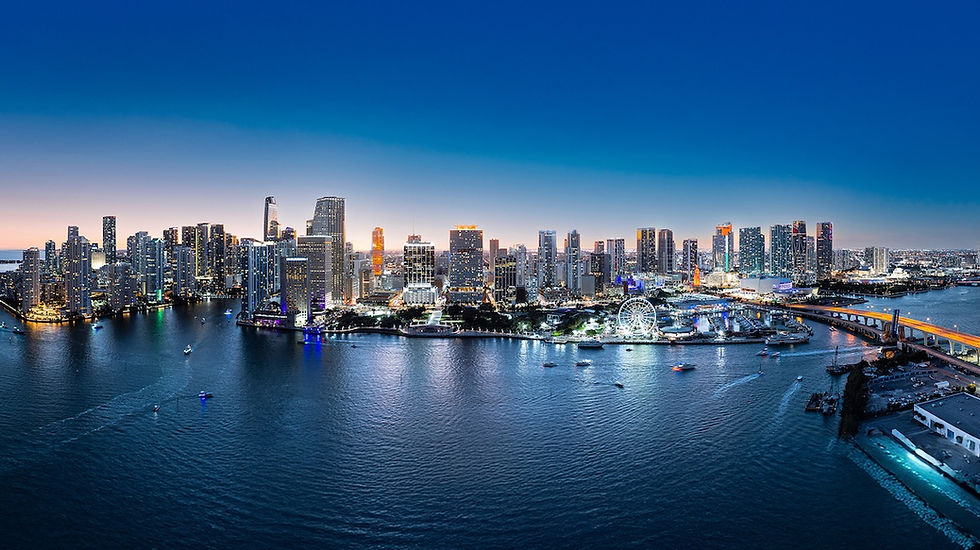
Few regions offer an ecosystem as naturally suited to residential yachting as South Florida.
Miami-Dade, Broward and Palm Beach together support a marine industry with an estimated $18.5 billion in annual economic impact and roughly 142,000 jobs, spanning marinas, shipyards, maintenance and refit, brokers, equipment suppliers, crews, yacht management and specialized services. The Marine Industries Association of South Florida represents more than 500 businesses across the sector.
Broward plays an especially important role. Fort Lauderdale has established itself as a global center for yacht maintenance and refit and hosts the Fort Lauderdale International Boat Show, considered the world’s largest in-water boat show. The event generates an estimated $1.73 billion in annual economic activity and showcases roughly $4 billion worth of vessels and marine products.
This concentration of infrastructure and customers is also creating new businesses. Miami-based Crescent Seas, for example, has opened a design studio for custom onboard residences, with units marketed from about $3 million. Projects including Ulyssia (image below) and Villa Vie are also trying to expand a category in which The World spent years with few comparable competitors.

From Exception to Market?
The larger question is whether residential yachting can move beyond a handful of ambitious projects and establish itself as a sustainable category within the luxury market.
Villa Vie offers one indication of demand. Its ship Odyssey has sold more than 85% of its residences after two years of continuous operation, and the company has already announced a second vessel, Legacy, scheduled for 2029, with larger residences and an expanded mix of dining, wellness and shared spaces.
When announcing the project, company founder Mike Petterson summarized the company’s thesis: “Residential cruising wasn’t just possible — it was sustainable.”
Other projects are targeting different ends of the market. Ulyssia is being developed as an international residential community with more than 100 homes and itineraries influenced by its owners. Four Seasons, meanwhile, is bringing a more residential approach to its new generation of yachts, offering larger suites with kitchens, private terraces and configurations designed for extended stays.
The Four Seasons model is not the same as owning a residence aboard The World, but it points in a similar direction: affluent travelers increasingly want more space, longer stays and a greater sense of continuity between life on land and life at sea.
The barriers remain substantial. Building and operating a residential ship requires enormous amounts of capital, advance sales, international logistics, permanent crews and the ability to sustain a functioning community for years. The sector also has a history of projects that were announced but never made it to sea, which helps explain why The World remains such an important benchmark after more than two decades.
Still, the pipeline suggests a shift in how some wealthy buyers think about mobility and ownership. For people accustomed to dividing their time among Miami, New York, Europe and other global destinations, the property no longer has to be simply the place they return to after traveling.
Increasingly, it can travel with them.


Comments